
Choosing a generator is mostly a sizing question. Get the kVA right and everything else — price, fuel use, service life — falls into place. Get it wrong and you either trip the breaker every time a motor starts, or you run a large engine at 20% load and slowly damage it.
Step 1: List what must run on generator power
Walk the site and write down every load that must keep running during an outage: air-conditioning, lifts, pumps, lighting, IT racks, cold rooms, production machines. For each one note the running power in kW (from the nameplate) and whether it is a motor.
If you only know the current, you can convert it. For a three-phase 400 V supply:
- kW ≈ 1.732 × 400 × amps × power factor ÷ 1000
- As a quick rule, 1 amp per phase at 400 V ≈ 0.69 kVA
Step 2: Convert kW to kVA
Generators are rated in kVA (apparent power) because the alternator must carry the full current regardless of power factor. Your equipment uses kW (real power).
kVA = kW ÷ power factor
Most mixed commercial and industrial loads sit around 0.8 power factor — which is also the standard rating point for diesel generators. So 160 kW of load needs a 200 kVA generator at minimum.
Step 3: Allow for motor starting
A direct-on-line motor can draw five to seven times its running current for a few seconds while it starts. The generator must absorb that surge without the voltage collapsing. Soft starters and VFDs cut this dramatically, so always tell us how your large motors are started.
The practical check: running load plus the extra starting demand of the largest motor must stay within what the generator can deliver for a few seconds.
Step 4: Add a safety margin — but not too much
We normally add 20–25% on top of the calculated running kVA. That margin covers:
- motor starting and inrush from transformers and LED drivers
- the derating needed at 45–50 °C ambient in the Gulf
- modest future growth
Going far beyond that is counter-productive. Diesel engines that run below roughly 30% load for long periods suffer from "wet stacking" — unburnt fuel accumulating in the exhaust — which raises maintenance cost.
Step 5: Round up to a real product
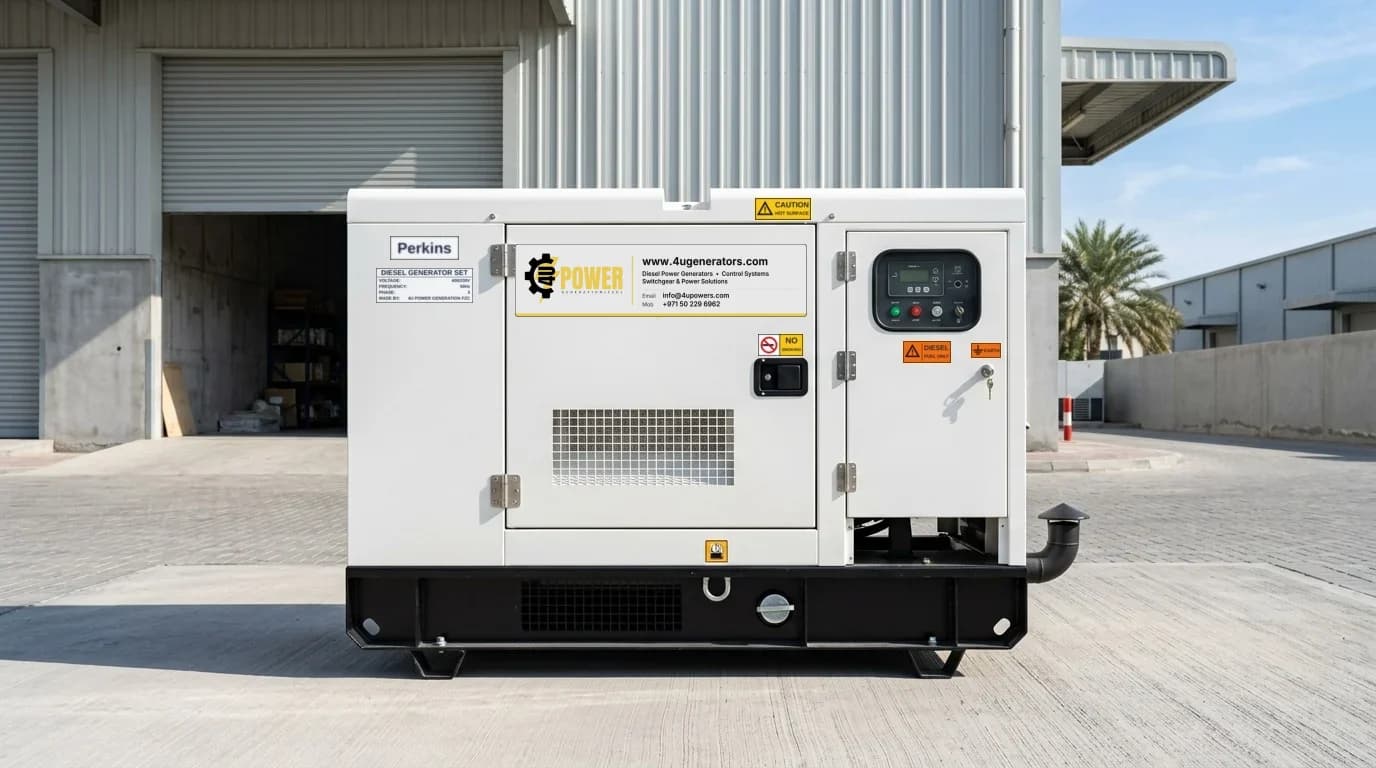
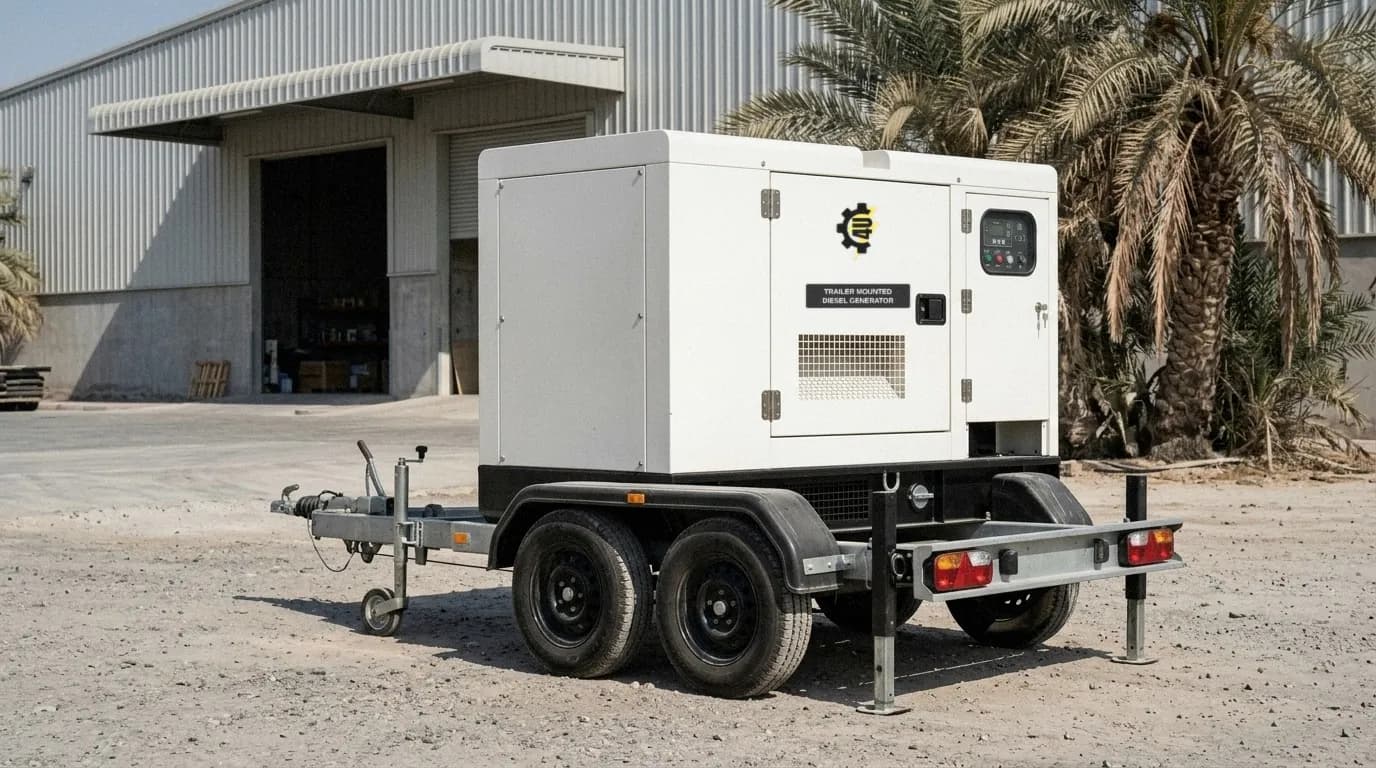
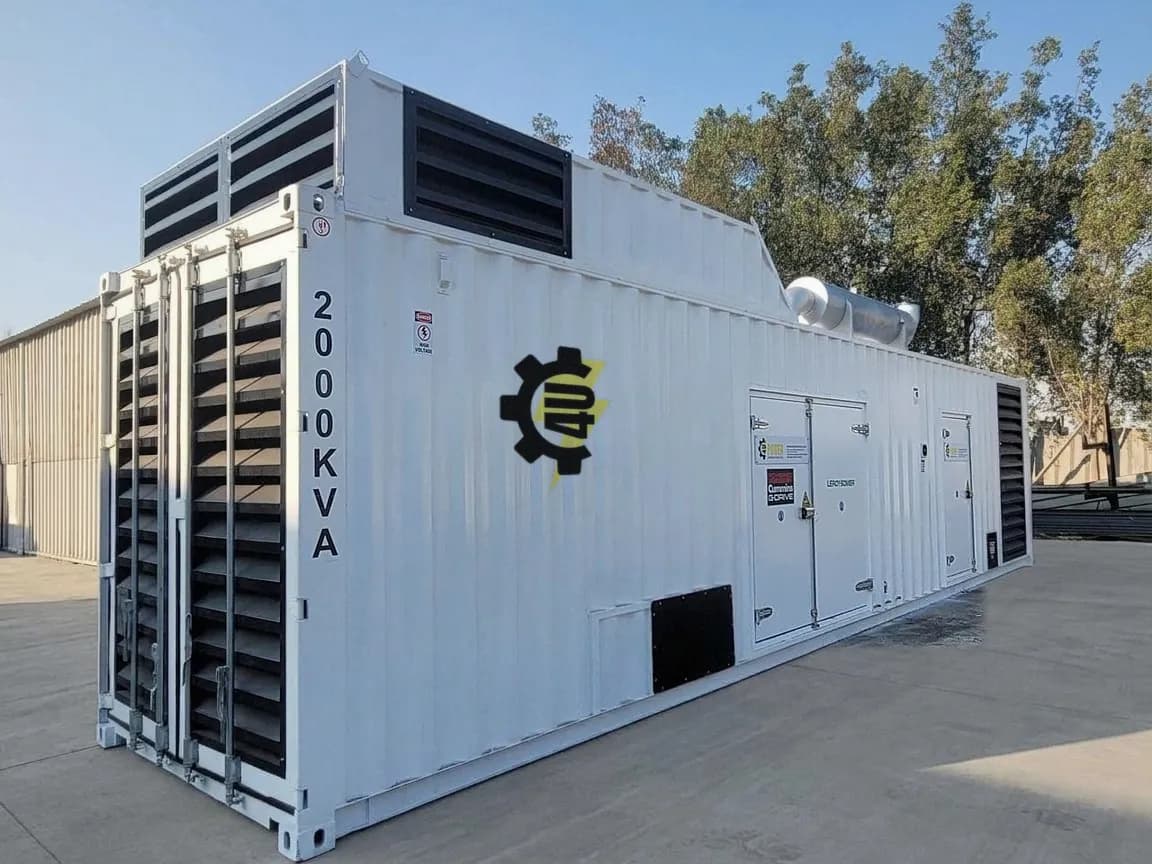
Generators come in standard ratings (20, 30, 50, 100, 150, 200, 250, 350, 500 kVA and so on). Round up to the nearest one, then decide on engine brand and enclosure. See our diesel generator range for the ratings we supply from 10 to 2500 kVA.
Don't forget the transfer switch
A generator only takes over automatically if it is paired with an automatic transfer switch. Size the ATS to the generator's full-load current — roughly kVA × 1.44 at 400 V. Our guide ATS panels explained covers this in detail.
Use the calculator, then talk to an engineer
Our free kVA calculator runs through these steps for you and suggests matching units from our catalog. Send the result to us on WhatsApp and an engineer will confirm the selection against your actual load list — usually the same working day.