A generator is not just delivered and switched on. In Dubai, a permanent standby set touches the electricity network, fuel storage, fire safety and the neighbours — so several parties have a say. Requirements change and differ by project type, so always confirm the current rules with your consultant and the authorities. This checklist covers what is typically reviewed.
Who is usually involved
- DEWA — anything connected to the building's electrical installation, especially the changeover arrangement
- Dubai Civil Defence — fuel storage, fire safety and the generator room
- Dubai Municipality — location, exhaust and environmental aspects such as noise and emissions
- The developer or community management — many master communities and free zones have their own rules for placement and noise
- Your MEP consultant — prepares the drawings and submissions
1. No back-feed into the grid
The most important electrical rule: the generator must never be able to feed power back into the DEWA network. That is why the changeover must be done by a proper ATS panel with mechanical and electrical interlocking, so mains and generator can never be connected at the same time. DIY changeover switches and plug-in arrangements are not acceptable for a permanent installation.
2. Fuel storage
Diesel is a fire risk, so expect checks on:
- tank capacity and location — larger volumes trigger more requirements
- bunding (a spill containment wall), commonly sized for at least 110% of the tank volume
- vents, fill points, level gauges and leak detection
- separation from ignition sources and building openings
Our fuel tanks are built with bunding and the fittings consultants expect.
3. Generator room or outdoor location
- adequate ventilation for combustion and cooling air — engines need a lot of it at 50 °C
- access for maintenance and for bringing in a load bank
- fire rating of walls and doors where the set is indoors
- a solid, level plinth with anti-vibration mounts
4. Exhaust
The exhaust should discharge where fumes cannot enter windows, air intakes or neighbouring buildings, usually above roof level with a suitable silencer and rain cap. Long exhaust runs need the right pipe size to avoid back-pressure.
5. Noise
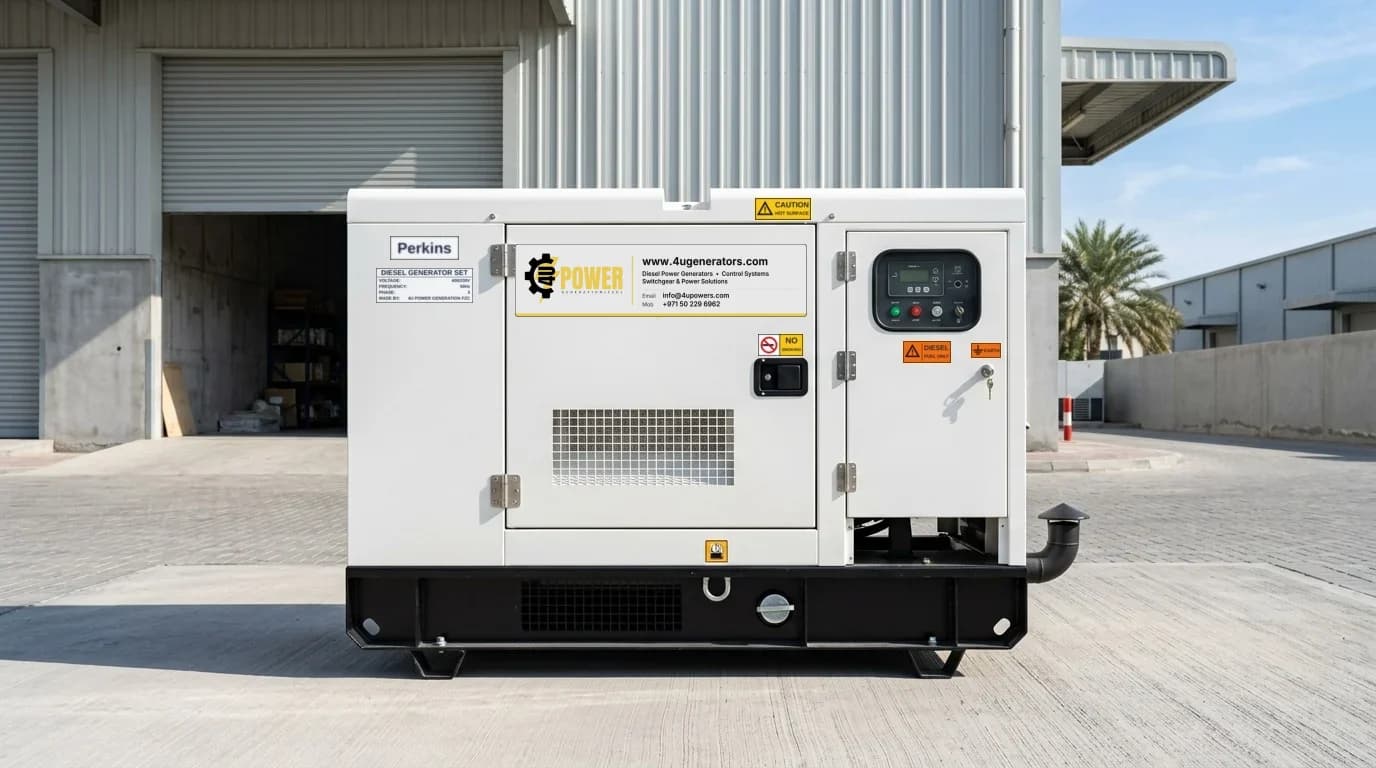
In residential areas noise is the most common complaint. A silent canopy or an acoustically treated room, plus careful placement away from bedrooms, prevents problems with neighbours and community management. Ask for the canopy's dB(A) rating at 7 m.
6. Earthing and protection
The generator neutral and frame must be earthed according to the building's earthing system, with protection coordinated with the main distribution board.
7. Testing and handover
Expect a witnessed test: start-up, transfer on simulated mains failure, load test and protection checks. Keep the test report and as-built drawings for the inspectors.
Let us prepare the package
We supply generators, ATS and distribution panels, fuel tanks and canopies with the datasheets, drawings and test certificates your consultant needs for submission — and we deliver across Dubai. Send us your project details on WhatsApp.